
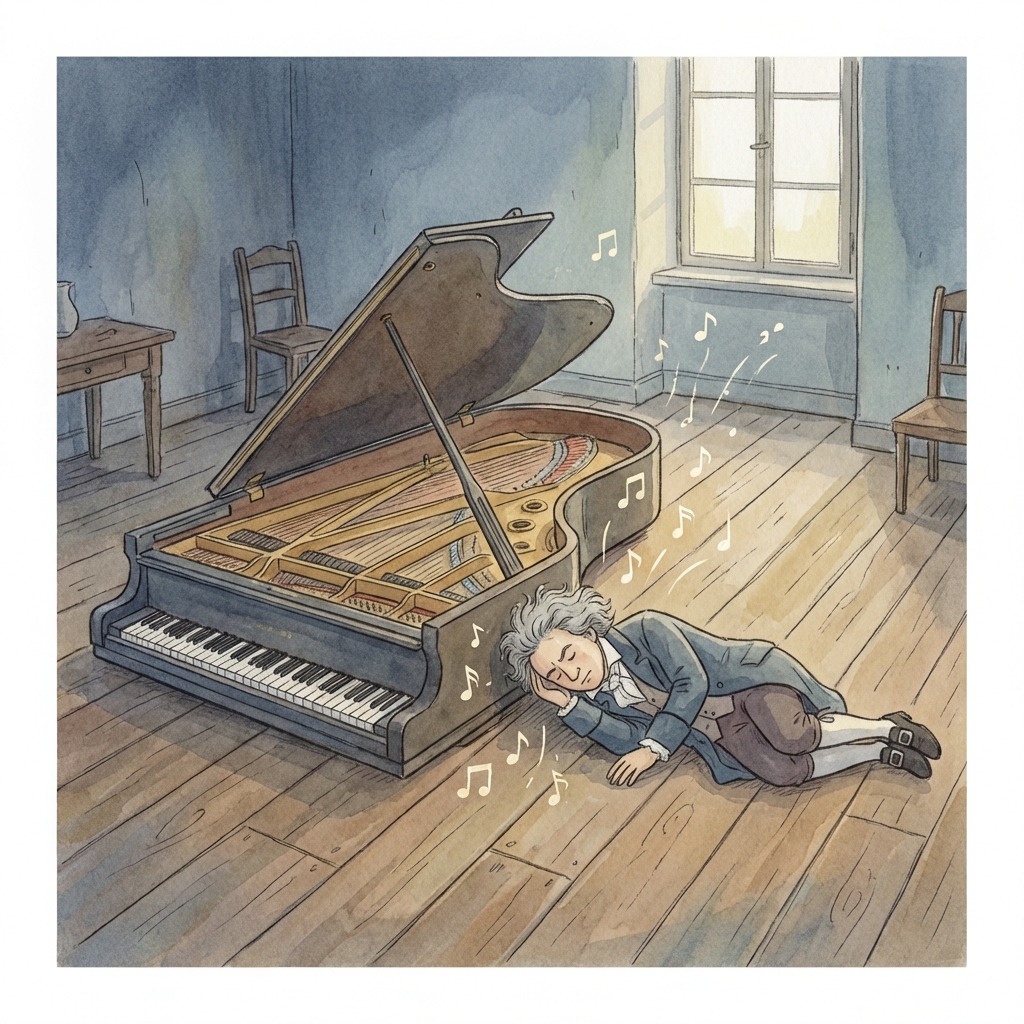
Ludwig van Beethoven and the Piano Without Legs

Beethoven removed the legs from his piano and pressed his ear to the floor to feel vibrations after losing his hearing. This episode explores how the great composer continued creating masterpieces through touch and reveals his musical surprises.

Duration: 26 minutes | Composer: Ludwig van Beethoven

What You'll Learn

  • Learn what dynamics are in music — the contrast between very soft (piano) and very loud (forte), and how Beethoven used these dramatic shifts like surprises to shock and delight his audiences
  • Understand how Beethoven continued composing masterpieces even after becoming completely deaf, feeling vibrations through his body and 'hearing' music in his imagination
  • Discover what program music is through the Pastoral Symphony — music that tells a story or paints pictures of nature without any words
  • Learn about perseverance and not giving up — Beethoven considered abandoning music when he lost his hearing, but chose to keep creating and gave the world its greatest symphonies
  • Explore what a symphony is and why Beethoven's 9th Symphony was revolutionary — the first to include voices singing, ending with a message that all people are brothers and sisters

Music Featured

Composer Title Source
Ludwig van Beethoven Piano Sonata No. 14 "Moonlight", Op. 27 No. 2 archive.org
Ludwig van Beethoven Fur Elise, WoO 59 archive.org
Ludwig van Beethoven Symphony No. 5, Op. 67 archive.org
Ludwig van Beethoven Piano Sonata No. 27, Op. 90 archive.org
Ludwig van Beethoven Symphony No. 6 "Pastoral", Op. 68 – I archive.org
Ludwig van Beethoven Symphony No. 6 "Pastoral", Op. 68 – II archive.org
Ludwig van Beethoven Symphony No. 6 "Pastoral", Op. 68 – III/IV/V archive.org
Ludwig van Beethoven Symphony No. 9 "Choral", Op. 125 – IV archive.org